DR FIT HQ | Physio Prestons & Gregory Hills

EDUCATION
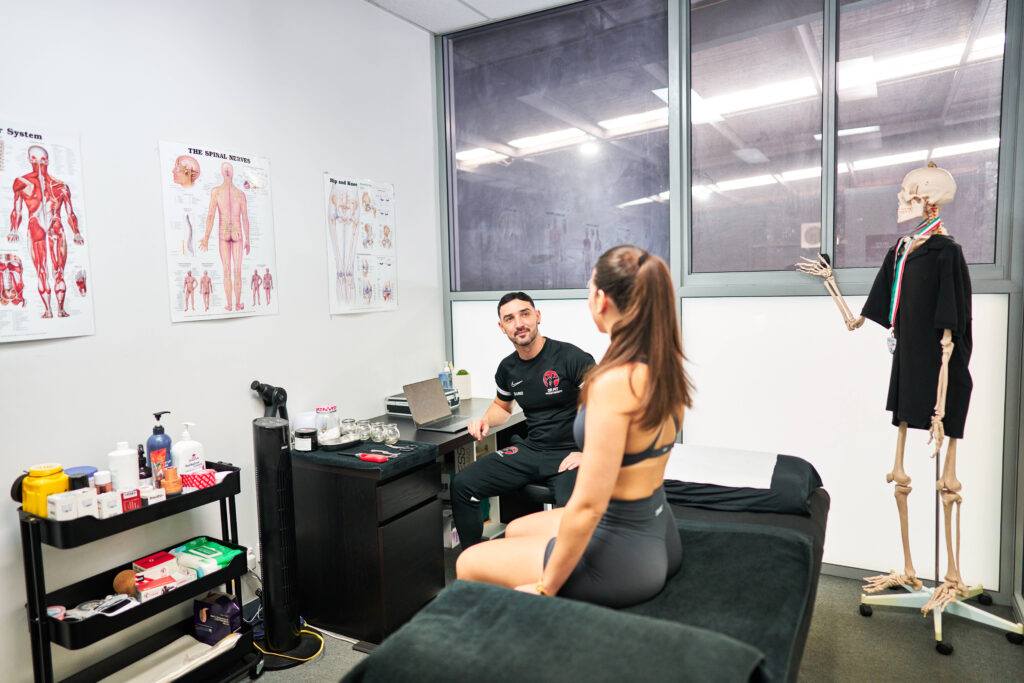
At DR Fit Physiotherapy we pride ourselves on providing our clients with the best knowledge about physiotherapy and injury management. We have a special interest in Non-Operative Anterior Cruciate Ligament (ACL) management with our very own principal physiotherapist Dario going through the protocol himself. With this we have become specialists in the field of non-operative as well as operative management for ACL injuries. We believe an informed patient is an empowered patient, so dive into our educational resources and enjoy the read !
SURGERY VS CROSS BRACING PROTOCOL
When comparing ACL surgery vs Cross-Bracing Protocol, several key factors must be evaluated such as the following:
- The patient has to present within one month of the injury.
- Diagnosis has to be a full ACL tear confirmed on MRI.
- Has to be functionally capable to be braced 24/7 physically and mentally.
- Severity of any meniscal tears.
The First 12 Weeks for CBP: This phase is all about protecting the knee to allow for healing while managing the side effects of immobilisation.
Weeks 1-4: The knee is braced and locked at 90 degrees, 24/7. You’re non-weight-bearing on crutches.
Weeks 5-8: The brace is gradually unlocked to allow for more movement each week. You remain on crutches, progressing from non-weight-bearing to partial-weight-bearing around week 8.
Weeks 9-12: Range of motion continues to increase until it’s unrestricted in the brace by week 10. You wean off crutches and return to full weight-bearing. The brace is removed completely at the end of week 12, after a follow-up MRI and medical consultation.
TYPES OF HEALING YOU CAN EXPECT WITH CBP
The healing seen on MRI is graded using a system called the ACL OsteoArthritis Score (ACLOAS). This is what the grades mean:
Grade 0 or ‘Gold Medal Heal’: A normal-looking ligament with regular thickness and continuity.
Grade 1 or ‘Silver Medal Heal’: A continuous ligament that may be thickened or have a high signal (indicating healing activity) but has a normal course.
Grade 2 or ‘Bronze Medal Heal’: The ligament is continuous but appears thinned or elongated.
Grade 3 or ‘Off The Podium Finish’: The ligament is absent or has a complete discontinuity (a full tear).

-
Clinic Opening Hours
- Monday - Friday 9:00AM - 7:00PM
- Saturday 8:00AM - 2:00PM
- Sunday Closed
Quick Links
Get In Touch
DR FIT HQ | Physio Prestons & Gregory Hills is proudly powered by WordPress